
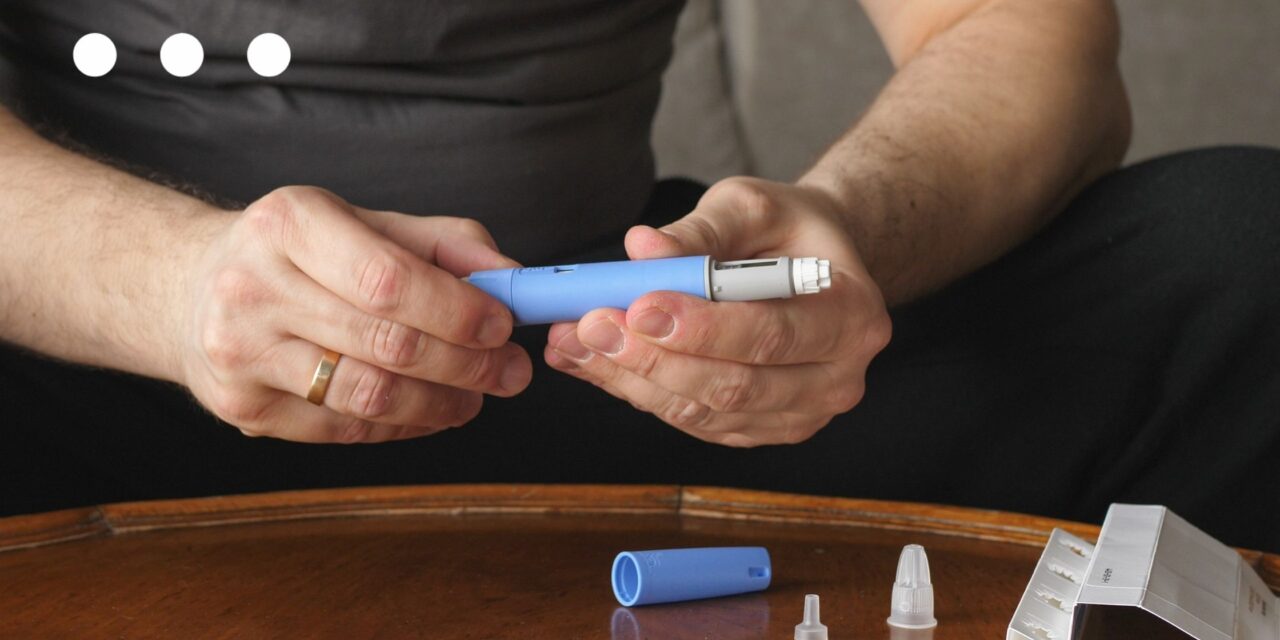
If your addiction treatment or aftercare plan includes a recommendation for GLP-1 drugs like Ozempic — no, it’s not a mistake. Turns out that these semaglutide-based medications, technically intended for managing diabetes but turned into a household name for their weight loss capabilities, can help with more than blood sugar levels or hunger cues. The miracle weight loss drug has shown exciting promise as a medication for and is being hailed by the researchers as a powerful new tool in addiction recovery.
How GLP-1 can help with addiction recovery
Researchers have been looking into the potential for GLP-1 for use in treating substance use disorders for nearly a decade now (as early as 2017). However, results from recent observational studies cemented the hypothesis that GLP-1 could help with addiction, generating newfound buzz about the medication.
In one study, researchers found that patients with GLP-1 prescriptions had nearly half the rate of opioid overdose and alcohol use compared to those who didn’t have a prescription. Another found that patients with cocaine addiction experienced a significant reduction in their cravings over a period of three weeks. Although further clinical research is needed to determine precisely why GLP-1 seems to work, there are a few theories why a medication so effective at weight loss also has a noticeable and positive effect on recovery patients.
Weaker drug-induced “highs”
If we had to pin the cause of addiction on a single culprit, it would be the neurotransmitter dopamine. Dopamine plays a pivotal role in motor function, cognition, mood regulation, pleasure, and motivation. Those latter two functions (pleasure and motivation) are the main drivers of the brain’s reward system, which determines what we like and pushes us to pursue those things that feel pleasurable.
The more powerful the dopamine response, the more likely it is that the brain will seek to encourage behaviors to repeat that action that triggered it, creating a cycle that is extremely hard to break. This is the foundation for drug addiction, in a nutshell.
So where does GLP-1 fit into all this? GLP-1 effectively dampens dopamine pathways, reducing the sense of reward derived from dopamine. There’s not much incentive to eat more if the food brings no joy, right? This is the same mechanism that disrupts the feelings of pleasure generated by drug use. A less active dopamine response means a weaker high from drugs and, therefore, less enjoyment from the behavior.
This loss of perceived pleasure reduces the brain’s motivation to continue pursuing those drugs, disrupting the cycle. Another effect of GLP-1’s influence on dopamine pathways, thereby disrupting the reward and pleasure cycle, is its ability to reduce drug cravings. The weakened sense of pleasure derived from powerful inducers like food or drugs creates the opportunity needed to reset it more permanently.
Lower stress levels
Affecting dopamine only trickles up GLP-1’s sleeve. Recent research discovered that GLP-1 also has a positive long-term effect on stress — one of the leading causes of drug cravings and drivers of relapse, and therefore, a constructive quality for a potential addiction treatment drug to have. Yet this came as a shock to researchers and continues to be a bit of a mystery.
GLP-1’s effects on stress aren’t as straightforward as its effects on dopamine. In fact, it’s downright counterintuitive. That’s because in the short term, GLP-1 increases sympathetic nervous system activity, the bodily response that triggers our fight-or-flight reaction and therefore actually increases stress. Not a particularly desirable side effect, right?
Well, It’s theorized that this heightened stress is the reason why GLP-1 is so effective at lowering the desire for food intake. It’s a well-known phenomenon: when fight-or-flight is triggered, the body is prioritizing survival; signals for things like being hungry or needing to use the bathroom are suppressed. This is what researchers believe is a major driver of why GLP-1 is so effective at suppressing appetite.
That’s just in the short-term, however. Whereas appetite suppression happens within days of taking GLP-1, in the long-term (around six months of regular use), studies have found that GLP-1 exhibits the opposite effect and actually reduces feelings of anxiety and depression. They’re not exactly sure why this happens, nor why the experience is universal (not everyone experiences the stress-reducing benefits).
Are GLP-1s approved as a medication to treat addiction?
No, technically, GLP-1 is not FDA-approved as an addiction treatment medication. But researchers are optimistic GLP-1 could soon earn that distinction with more clinical research. Until then, there are thousands of drug treatment facilities available that can support your addiction treatment recovery.